Wednesday, July 31, 2024

Polish Writer Piotr Siemion - First Guest of the Fall Season, Brentwood, Saturday, 28 September, 2024, 6 pm


On 28 September 2024 at 6pm, the Modjeska Art & Culture Club will have the pleasure of presenting a Polish writer, Piotr D. Siemion, a Warsaw-based novelist and translator, who also works as a corporate attorney. The event will be held in a private residence in Brentwood and will be open only to Club members and VIP guests of the speaker. RSVP prezes@modjeska.org.  The interview will be conducted by Dr. Jerzy Kossek, specialist in Polish-American literature who teaches at University of California, Irvine and is a  Modjeska Club member. 

Piotr D. Siemion is an accomplished novelist and essay author, writing in English and his native Polish. He was  raised in the academic center of Wrocław (the pre-1945 Breslau) in Poland, where he studied English  Literature and was, in his own words, "a bit of a counterculture figure." After his early debut as a literary translator, he spent his formative years in New York City. In 1988 he traveled to the United States as a Fulbright scholar, where he wrote his doctoral dissertation on the subject of American twentieth-century novels. Between 1988 and 2000 he moved between the US (New York) and Canada (Montreal), during which time he published a series of translations, among others, of Yeats' poetry and Tom Clancy's prose. He has translated Thomas Pynchon (the ingenious translation of The Crying of Lot 49, for which he won the 'Literatura na Świecie award), John Gardner and Robert Nye. He worked as a columnist and anecdote writer for the underground journal 'BruLion'. In 1997 he completed his legal studies at the University of Columbia and worked in Manhattan in the legal practice of Weil, Gotshal & Manges. Since the summer of 2000 he has lived in Warsaw.

His return to Poland after twelve years abroad coincided with the beginning of his novelistic career. He lives just outside Warsaw, that the writer describes as "a zany, postmodern city, where one can, these days, fully experience the 21st century dynamics of intermingling languages, civilizations, and ideas, while remaining rooted in Europe’s difficult history." In fact, his artistic work has always been marked by cross-border but also cross-disciplinary influences. In the U.S. he received his Ph.D. degree in American fiction but also studied for a law school degree, both from Columbia University in New York. In the last three decades, Siemion has pursued a two-edged career of an international lawyer and a novelist, never being able to decide which path to abandon. In the end, he is still doing both things at once, writing novels and, in parallel, working on AI projects for a Warsaw-based publishing house. 

In his early years, he used to translate into Polish the works of British, Irish, and American authors, including Thomas Pynchon, Robert Nye, and W.B. Yeats. In 2000, he published his first novel, Niskie Łąki (“Low Meadows”), which was hailed as the literary event of the year, and was subsequently translated into German, Hungarian, and Ukrainian. It was meant as a chronicle of his post-Communist generation, depicting the transition from the Cold War era to the new, chaotic, capitalist order of things. In 2004, his second novel, Finimondo, appeared, to good reviews but less publicity. It was a business thriller and, for a second novel, it had good reviews. In 2015, the book was followed by a personal, book-length biographical essay, The Year of the Snake. A Diary. In the meantime, he periodically published other literary translations (listed below), essays, and reviews. 

Siemion published his most recent novel, Bella, ciao, in 2022. A post-apocalyptic riff on modernity’s key philosophical issues, it coincided with Russia’s invasion on Ukraine. Accordingly, some critics read it as a fact-based report from the conflict. At any event, in 2023 Bella, ciao, was shortlisted for the Warsaw Literary Prize, as well as the Central European Literary Prize Angelus. At this time, Siemion is busy outlining a new work of fiction, but in parallel he concern myself with the rapidly changing Polish and English literary idioms. In fact, he enthusiastically embraced the chance to translate Solar Bones into Polish precisely because Mike McCormack’s novel intermingles the 21st century vernacular with strong echoes of grand literary traditions: an exercise in literary sleight-of-hand that is a challenge and a joy to its translators. 


DR. JERZY GEORGE KOSSEK

Dr Kossek is a Polish-American Americanist, Associate Professor writer, poet, literature and music critic, theater director, promoter and producer, radio host, Fulbright Visiting Professor at University of California, Riverside, Former Chair and Associate Professor at University of Bielsko-Biala, Poland. Former English and American Literature and Culture Professor at University of Occupational Safety Management. He holds MA in English and American Literature and Culture and a Doctoral Degree in American Literature from the University of Silesia, Poland. A recipient of several international research awards, he lectured in Europe and USA. In Poland under Soviet regime he organized and founded American Club Association in cooperation with American Consulate General in Krakow, Poland. His passion for American core music - Blues - resulted in co-organizing the world's biggest blues festival - Rawa Blues Festival. He also organized or contributed to Poetic Blues Café, Academic Blues Conference, and Route 66 Seminar.
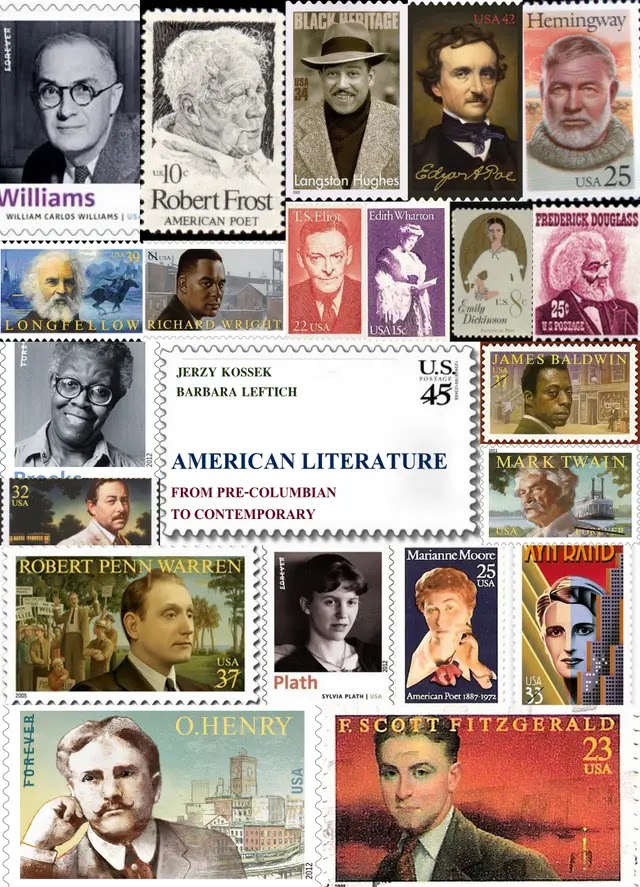

He is the founder and Director of Ethnic Studies Center and actively supported the efforts to organize the Blues Hall of Fame in Memphis. Dr Kossek is the author of many academic books on American literature, culture and music. He is a singer/songwriter and poet. His first CD entitled The Blues Sharpener’s Daughter earned The best concept album status in 2014 at Polish-American Music, Folk and Arts Fest in Zywiec, Poland. Dr Kossek wrote and directed theatrical performances in Katowice and Bielsko-Biala and Los Angeles. He is an Academic Tutor and has 35 plus years of experience teaching English and related subjects at all levels. He currently teaches creative writing at California MiraMar University in San Diego. Recently he initiated Blues Poetic Café, under the name of Blues and Jazz Poetic Café at historic Leimert Park location in Los Angeles. George supports the local communities in LA, Riverside and Orange Counties with volunteer work as the Director of Music, Culture and The Arts for Greater Los Angeles Fulbright Association and as Artistic Director for Barbara Morrison Performing Arts. 


Artistic Performances

Kossek, started his passion for American core music - The Blues, which resulted in many ventures. The most significant of them, co-organization of Rawa Blues Festival in Katowice, Poland. Over the years the Festival grew to the biggest blues fest status in the world under the roof and also one of the oldest. Most of the top blues personalities like Koko Taylor, Junior Wells, Robert Cray, Keb' Mo', James Blood Ulmer & Vernon Reid, Otis Taylor performed at the Flying Saucer venue, a 60.000 spectators concert arena. The Festival is the recipient of the Keeping the Blues Award for the Best International Festival. To stress the role of text/lyrics/poetry/art in blues music and interdisciplinary character of blues culture Kossek founded The Poetic Café - a venue happening yearly alongside the Blues Fest gathering poets, songwriters, artists and painters, students and fans over workshops, seminars, competitions and artistic happening on and off the main stage. The Poetic Café, unlike the Blues Fest, is opened throughout the whole year, inspiring the wide audience all over the world.

https://jerzygeorgekossek.com/

PHOTOS FROM THE EVENT


Tuesday, June 4, 2024

Anna and Irek Dobrowolski Present "Struggle: The Life and Lost Art of Szukalski" - Friday, 21 June 2024 at pm


Helena Modjeska Art & Culture Club presents a screening of the documentary "Struggle: The Life and Lost Art of Szukalski" with the participation of the film's producers Anna Dobrowolska and Irek Dobrowolski.  Information about them  is included below. 

The film will be shown at LAPAC/Promenade Playhouse Los Angeles Performing Arts Conservatory - 10931 W. Pico Blvd. Los Angeles, CA 90064 – on Friday, June 21, 2024 at 7:00 p.m. Admission is free for club members, $30 for guests. Seating is limited. Checks payable to Helena Modjeska Art Culture Club or PayPal: prezes@modjeska.org. RSVP prezes@modjeska.org.


STRUGGLE: THE LIFE AND LOST ART OF SZUKALSKI (Wikipedia)

Struggle: The Life and Lost Art of Szukalski is a 2018 documentary film directed by Irek Dobrowolski, written by Stephen Cooper and Irek Dobrowolski and starring Stanisław Szukalski, Glenn Bray and Robert Williams. The documentary is produced by Leonardo DiCaprio, and his father George DiCaprio.[The film was released by Netflix on December 21, 2018. The documentary tells the story of the Polish artist Stanisław Szukalski’s troubled life and complicated body of work. He created his own language, and is an innovative sculptor, who once lost all his work in a Nazi bombing raid. It also focuses on his nationalism in the lead-up to World War II, and his subsequent transformation during the second half of his life. The documentary was reviewed positively by Karen Han in The New York Times, who stated that it "manages to deliver" on the breadth and depth implied by the title. Han noted: "Still, for Bray, George DiCaprio and others who knew Szukalski in his final years, their struggle with his past is deeply personal. They effectively become subjects themselves, grappling with how he ought to be remembered. The viewer is left to decide."

Anna Dobrowolska (from filmstreet.pl)

ANNA DOBROWOLSKA

Producing films and television programs since 2002, Anna's most recent release is the feature documentary Struggle: The Life and Lost Art of Szukalski from producer Leonardo DiCaprio and NETFLIX Studios.  Struggle premiered on December 21, 2018 at LACMA in Los Angeles and is now available 190 countries (in 34 languages) to an audience of 160 million. Reception has been phenomenal: rave reviews in top publications from around the world (New York Times, Observer, Guardian, Daily Mirror, Tribune and many more); Netflix ranked it 4th Best Film of 2018; and ranks #5 on the list of Must See movies in 2019 according to IMDb - the most popular industry portal and the defacto authority in film and television. Her portfolio boasts an extensive run in television, having produced more than 300 episodes and 26 broadcast shows, a number of on-stage musicals with famous Polish stars played in Warsaw’s Sala Kongresowa and the Polish National Opera, and multi-award winning productions like In Fortunes Debt, Dancing with Drugs, and The Portraitist.


IREK DOBROWOLSKI

Director of over 25 documentaries and two feature films - many of which have been internationally nominated and awarded, including The Magnolia Award at Shanghai Film Festival, the Grand Prix at Stockholm’s International Film Festival, Lajkonik at Krakow Film Festival and the Golden Phoenix at Warsaw’s Jewish Motifs Festival. His film August Sky: 63 Days of Glory has become a cult favorite in Poland, with more than 350,000 Facebook fans who post poems and show off August Sky tattoo art. The trailer has garnered over 8 million views on Youtube. Irek's latest film, Struggle: The Life and Lost Art of Szukalski, was produced by Leonardo DiCaprio and released by Netflix Studios.


Stanislaw Szukalski and Leonidas Dudarew-Ossetynski, 1973. From the Archives of Valerie Dudarew-Ossetynska-Hunken. Used by Permission

STANISLAW SZUKALSKI (1893-1987) AND THE MODJESKA CLUB

by Maja Trochimczyk, based on materials from Celebrating Modjeska in California: History of Helena Modjeska Art & Culture Club (Los Angeles, 2023)

Szukalski was an innovative and visionary sculptor, whose education alternated between Poland and the U.S., and who designed many original sculptures before WWII.  After he refused to create a portrait of Hitler and Germany attacked Poland, his studio was targeted in bombings and all his works were destroyed by German Air Forces in the raids on Warsaw at the beginning of September 1939. He was buried in rubble during a bombing in Katowice, but survived. Several months later he was allowed to leave Poland with his American-born wife, Joan. 

1955 Theatrical Program of the Modjeska Players fundraiser for the Modjeska Monument
Club Archives. The Modjeska Players logo designed by Szukalski.

After the war, Szukalski settled in California and continued to design sculptures and monuments. Alas, he was only able to complete small models, portraits, paintings and medals; no large-scale sculptures were built. Two designs of Helena Modjeska Monuments are among his sketches and the Modjeska Club's founder, Leonidas Dudarew-Ossetynski was earlier the chair of a committee organized to fundraise for the construction of this monument in Los Angeles in 1955.  


Szukalski's Letter with an explanation of the meaning of the Helena Modjeska Monument. Leonidas Dudarew Ossetynski Collection at the Polish Museum of America, Chicago. 

In an undated letter addressed to Ossetyński, kept in the Polish Museum of America’s archives with an inscription “Helena Modjeska Memorial Committee” on its back (the letter was folded and appears to have been sent on 28 September 1954, without an envelope), Szukalski wrote about his intention to portray the actress in his sculpture as a dancer that held a heart, a crown, and a moon in her hands. Posed asymmetrically like a flamenco dancer with her castanets, Szukalski’s Modjeska was towering above a knee-high model of St. Mary’s Basilica in Kraków, Modjeska’s hometown. Szukalski described this building as both “the most characteristic monument of Kraków” and “the most beautiful temple.” In this design, which could have been quite offensive to religious zealots, with the actress towering above the Basilica, in a provocative pose and scant clothing, the sculptor’s intention was for Modjeska to become “a reflection of her national origin” so that she “radiates onto the audience of foreign nations with her proud heart.” 


One of Modjeska Monument designs by Szukalski, reproduced in the 1955 program 
of the Modjeska Players' fundraiser to construct the monument. Modjeska Club Archives.  
The original is in the Szukalski Archives, managed by Glenn Bray. 

Ultimately, the project was not realized.  Instead, Szukalski designed the logo for Ossetynski's first California theatrical endeavor, that is the Modjeska Players that toured the U.S. and Canada in 1955-1958.  He then designed a Copernicus poster that was distributed with signatures to Club members and an envelope to commemorate Copernicus's  500th Birthday in 1973.


An envelope with a commemorative stamp by Stanisław Szukalski, 
prepared for the 500th anniversary of the birth of Nicolaus Copernicus 
(19 February 1973; the U.S. postal stamp of 23 April 1973). Club Archives.

The  initial, highly successful event of the Modjeska Club was held in the Hollywood home of Ossetyński in May 1973. It was dedicated to the art of an original Polish sculptor, Stanisław Szukalski   who hitherto stayed away from Polish émigré organizations.

Ossetyński explained: 

The first event was a very important test for the Club. It was about gaining new members and drawing the attention of the Polish community to the meaning and overtones of our plans. An excellent Polish sculptor, Stanisław Szukalski, has been living in Los Angeles for years. Unfortunately, the local Polonia has not taken an interest in him, and if he is known to the newcomers, it is more for his controversial feats, not for the great works he creates in the isolation of his rich creativity. In short, I decided to familiarize my compatriots with his interesting art, and also to use it, somewhat as a lure. When I offered him a meeting where he was to give a lecture illustrated by his works, he declined. But I persisted until he agreed. I had a nose. It turned out to be a super atomic bomb. At home, the walls were bursting at the seams as it were from the excess of people who had arrived. Everyone bought an interesting lithograph of the bust of Copernicus, designed and made by the great artist, and fifteen new members signed up to the Club immediately. 

The first meeting of the Modjeska Club with Stanislaw Szukalski, May 1973. Joan Szukalski, Stefanie Powers and Stanislaw Szukalski speaking. From the Archives of Valerie Dudarew-Ossetynska Hunken. Used by permission.

Szukalski joined the group of Modjeska Club's Art Advisors and was listed on the Club's letterhead between 1973 and 1978 along with the club's co-founder composer Stefan Pasternacki, actress Stefanie Powers, fiber artist Yolanta Wojkiełło-Martusewicz, and dancer-choreographer Stefan Wenta.  He designed an eagle as a logo for the Club but it was never used; instead a different design based on a Piast eagle by Waclaw Gazinski appeared on the Club's letterhead in the first decade of its existence. 

At the same time, Szukalski worked on developing an all-encompassing original, and bizarre anthropological theory of “everything”—races, languages, mythologies, —that he called the “science of Zermatism.”  In a 1978 note in Polish Americans in California, Gene Harubin Zygmont described him as “an esoteric artist and thinker… a writer, painter, medalist and a man of ideas” who was “very much in evidence and working in California.”  In that period, he designed monuments of Copernicus; Polish officers, Prisoners of War, murdered in Katyń in Soviet Union by the NKVD; and the French Resistance fighters of WWII. None of them were built. 

Szukalski with Modjeska Club members in late 1970s. 
On the wall Ossetynski's portrait by Szukalski.


PHOTOS FROM THE SCREENING